
The Community Lounge » Your first week as a community manager: What actually matters
Your first week as a community manager: What actually matters
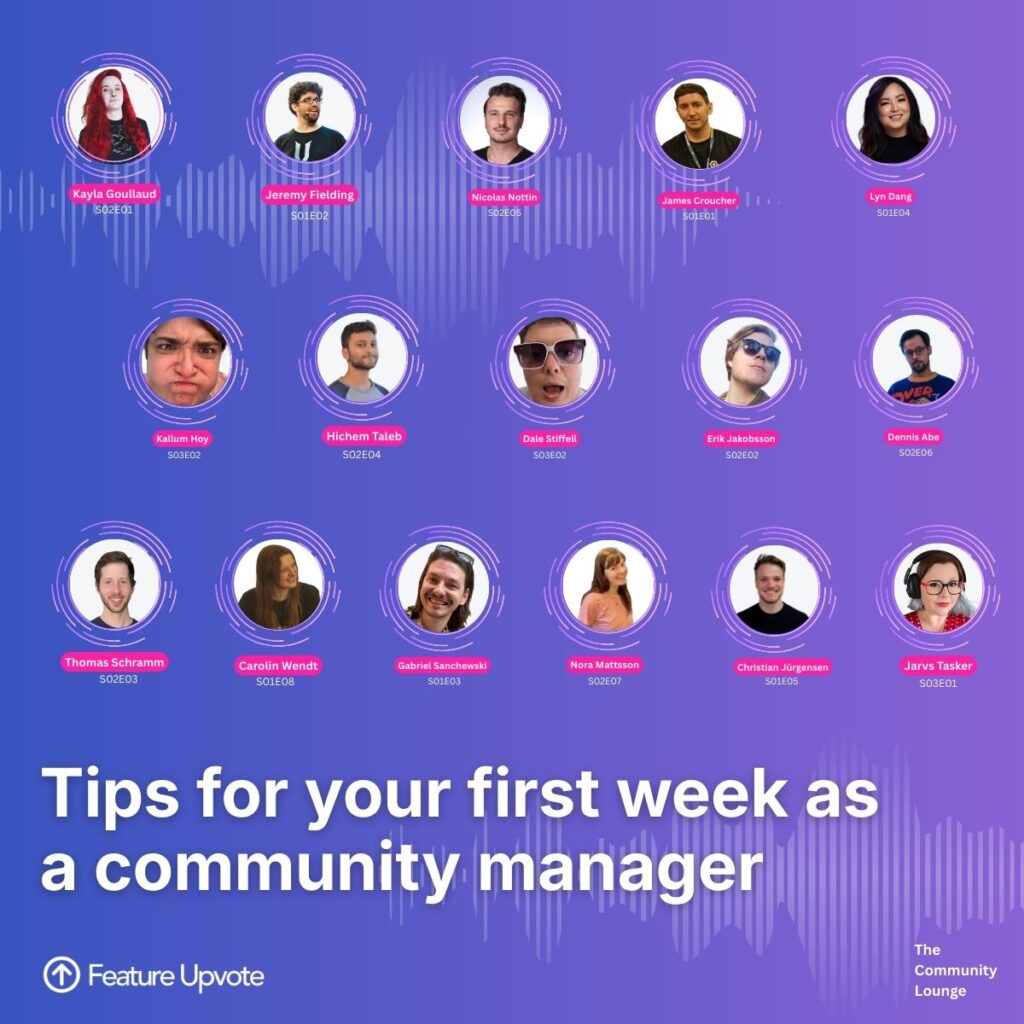
Starting a community management role feels like being handed the keys to someone else’s house while they’re on vacation. You know there’s a system, but nobody left instructions.
The good news: every community manager before you felt the same disorientation.
The better news: there are concrete things you can do in week one that will set you up for everything that comes after.
1. Learn about your game & dev team like your job depends on it (because it does)
You can’t represent something you don’t understand.
Before you respond to a single complaint or craft a single post, you need to know the game deeply. Not just how to play it, but why people play it. What frustrates them. What brings them back.
“One of the first tasks I ever got was to go through all of our reviews on Amazon, Steam, what have you, and pick out the top issues that I saw. My boss wanted me to start training my gut.” – Kayla Goullaud (S02E01)
This extends beyond the game itself.
You need to understand the development team: what they’re working on, what constraints they face, why certain decisions get made.
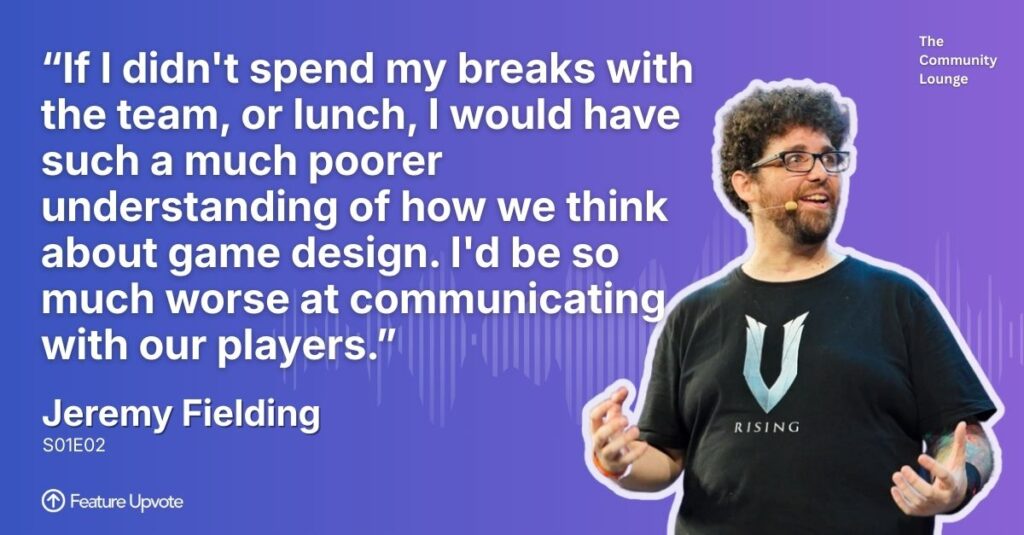
“If I didn’t spend my breaks with the team, or lunch, I would have such a much poorer understanding of how we think about game design. I’d be so much worse at communicating with our players.” – Jeremy Fielding (S01E02)
Some practical steps for week one:
- Play the game extensively, even if you think you already know it
- Ask the design team to explain recent decisions to you
- Review the last months of community feedback
“It’s a lot of discussions first internally with the rest of the team. What is it that we want to provide? What kind of experiences? But also what are the crazy things that we would love to see being achieved?” – Nicolas Nottin (S02E05)
2. The community knows more than you. Use that.
Your first instinct might be to establish authority. Resist it.
The players who’ve spent hundreds or thousands of hours in your game understand nuances you won’t grasp for months.
For example, train simulator communities can tell you the exact number of rivets that should appear on a specific locomotive. Transformers fans know lore you’ve never encountered. Be humble and learn from them.
“I couldn’t argue back about anything. I couldn’t say something back to them because they knew better than me.” – James Croucher (S01E01)
The practical application: ask questions. When someone posts feedback, dig deeper. When you don’t understand something, say so. The community will teach you if you let them.
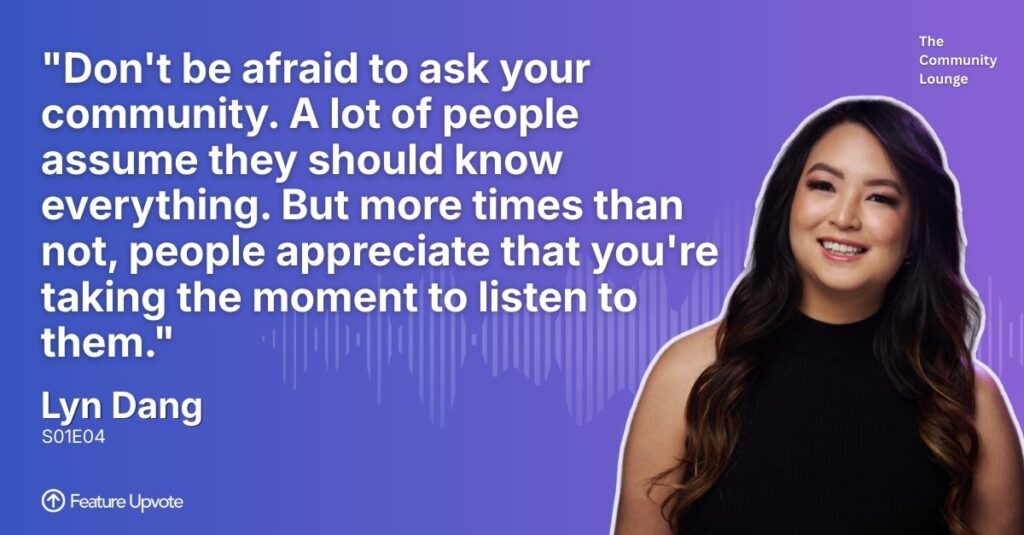
“Don’t be afraid to ask your community. A lot of people assume they should know everything. But more times than not, people appreciate that you’re taking the moment to listen to them.” – Lyn Dang (S01E04)
3. Watch what others are doing (both good and bad)
You’re not inventing community management. Others have been doing this for years, and their successes and failures are visible if you look.
Join Discord servers for games similar to yours. Follow community managers on social media. Pay attention to how studios handle announcements, crises, and routine communication.
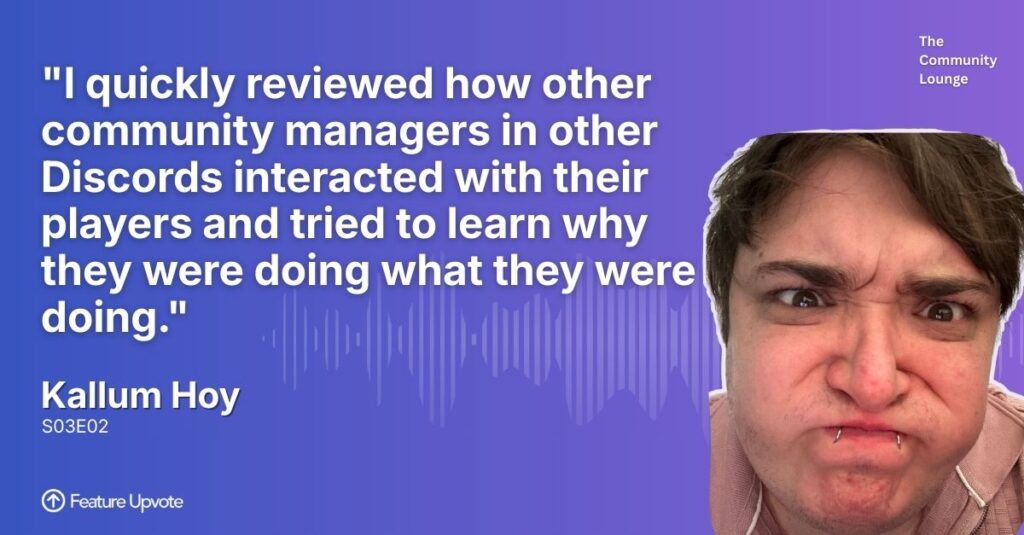
“I quickly reviewed how other community managers in other Discords interacted with their players and tried to learn why they were doing what they were doing.” – Kallum Hoy (S03E02)
While studying successes are useful studying failures is even better.
“One of the things that I always tell people is like, maybe you should learn from games that fail. There is a lot to learn from games that didn’t work out.” – Hichem Taleb (S02E04)
“I played League of Legends for 10 years. I’ve got 1500 skins. I still don’t know who the community manager is. That to me is bad community management. I always go, actually, we’re not doing community management like these guys.” – Dale Stiffell (S03E02)
4. Build internal relationships before you need them
Community management sits at a strange intersection. You’re not quite marketing, not quite support, not quite production. You need allies across all of them.
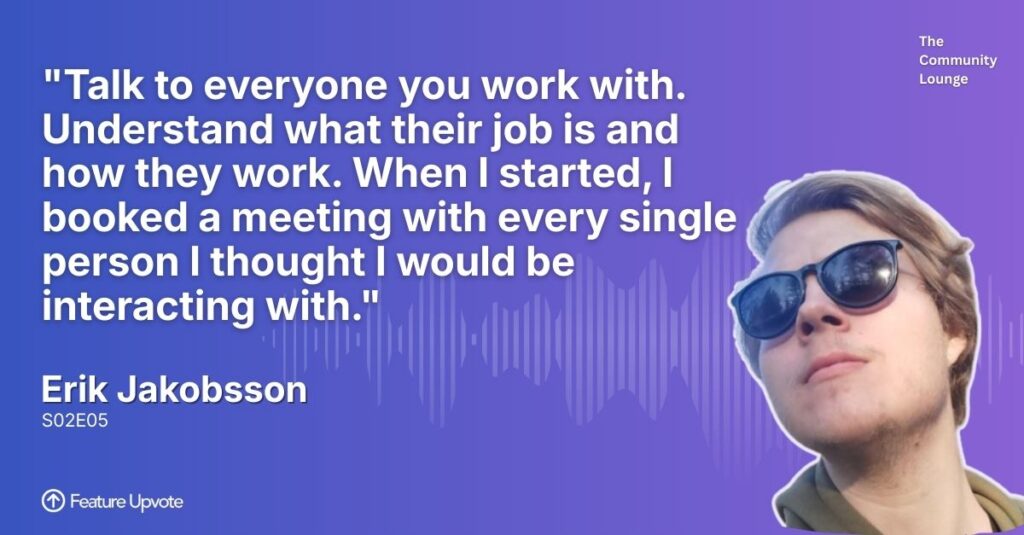
“Talk to everyone you work with. Understand what their job is and how they work. When I started, I booked a meeting with every single person I thought I would be interacting with.” – Erik Jakobsson (S02E02)
These relationships pay off when you need to escalate urgent feedback, when you need quick answers during a crisis, or when you’re advocating for community-requested features.
“A lot of really good community managers also focus on the communication internally into the company. If the developers and the company trust you, you have so much more freedom.” – Dennis Abe (S02E06)
Your first week is the easiest time to schedule these conversations. Everyone expects the new person to be asking questions. Use that window.
5. Accept the chaos
Community management doesn’t have clean boundaries. Your job description will be incomplete on day one and probably remain incomplete forever.
“When you’re the community manager or social media manager for a small indie company, you of course have to wear a lot of hats. That is expected.” – Thomas Schramm (S02E03)
The flexibility that makes this role chaotic also makes it interesting. You might be editing videos one day, writing patch notes the next, moderating a heated Discord argument after lunch.
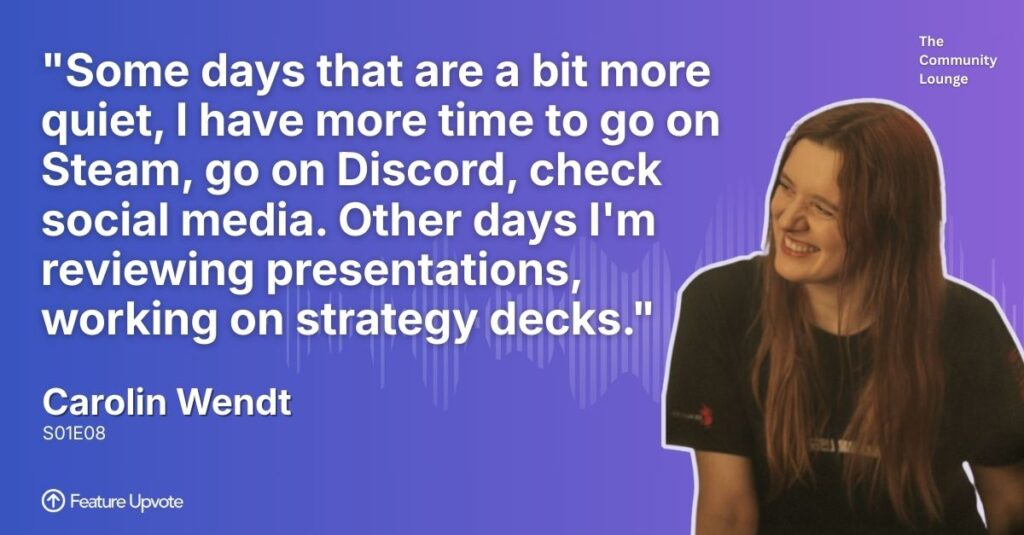
“Some days that are a bit more quiet, I have more time to go on Steam, go on Discord, check social media. Other days I’m reviewing presentations, working on strategy decks.” – Carolin Wendt (S01E08)
6. Imposter syndrome is part of the package
If you feel like you’re faking it, congratulations: you’re having the universal community manager experience.
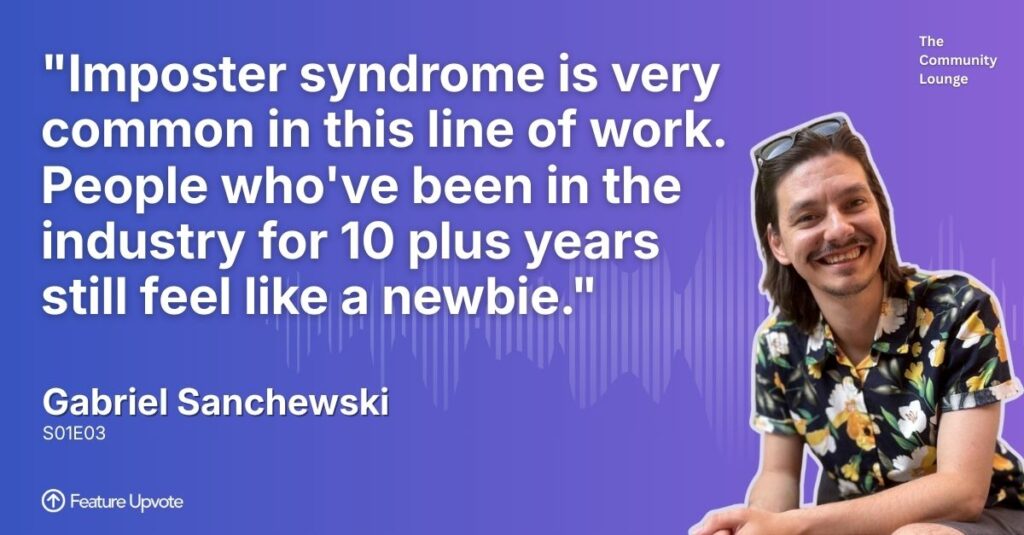
“Imposter syndrome is very common in this line of work. People who’ve been in the industry for 10 plus years still feel like a newbie.” – Gabriel Sanchewski (S01E03)
“In game dev, imposter syndrome is really common because you really do never feel like you know what you’re doing. But I think that’s just adulthood in general.” – Jeremy Fielding (S01E02)
This isn’t just a community manager thing, it’s an everyone-in-games thing. None of you feel like you really know what’s going on or deserve to be here. But you do. You’re all in this together.
The discomfort doesn’t mean you’re doing something wrong. It means you’re paying attention to how much you don’t know yet. That awareness is useful. The people who think they have all the answers are the dangerous ones.
“The most difficult thing I’ve tried to face is to admit, like to face, that I am a community manager. That imposter syndrome. Accept that it’s okay to not reinvent the wheel.” – Nora Mattsson (S02E07)
7. Audit before you act… but know when to move fast
Resist the urge to change everything immediately. Your fresh perspective is valuable, but so is understanding why things are the way they are.
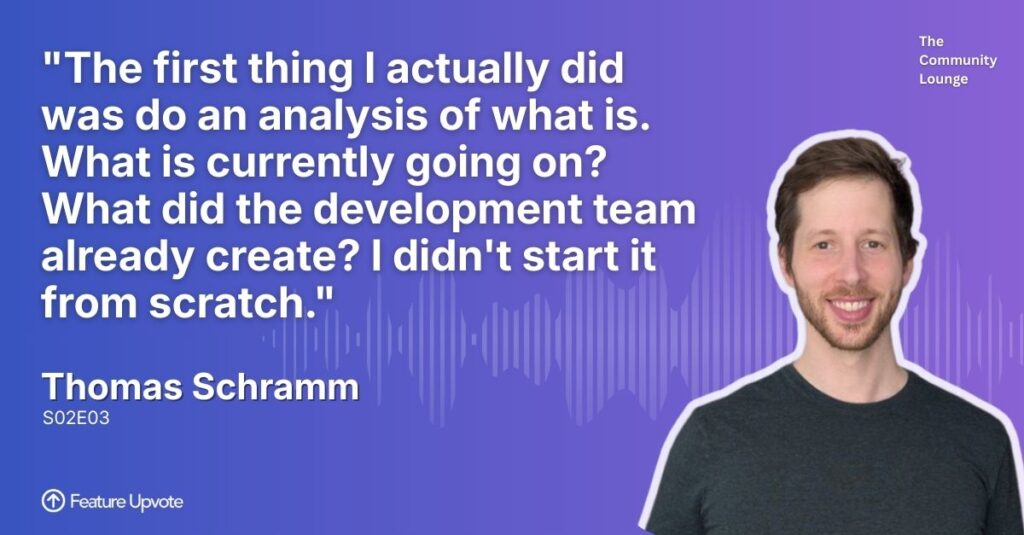
“The first thing I actually did was do an analysis of what is currently going on. What did the development team already create? I didn’t start it from scratch.” – Thomas Schramm (S02E03)
Document everything you observe. The Discord channels that seem abandoned. The feedback that keeps repeating. The community members who seem to have influence. Write it all down, even if you don’t know what to do with it yet.
But community management also requires split-second decisions. Communications moves fast. When a bug hits, when players are angry or when misinformation spreads, you need to act quickly.
The real skill isn’t always auditing first. It’s knowing:
- When you need to say something immediately
- How to stay composed and on-message in the moment
- What to say (and what to hold back) when things are moving quickly
Don’t let “analysis paralysis” stop you from responding when the community needs you. Strategic planning is important. But so is decisive action when the moment calls for it.
8. Protect your boundaries early
Community management can consume you if you let it. The players don’t sleep, the timezone coverage never ends, and there’s always one more comment to respond to.
“Being a community manager doesn’t mean that you’re always available. I kept responding to players on weekends and evenings. No one really needs you all the time.” – Dennis Abe (S02E06)
Set your working hours and communicate them. Mute notifications when you’re off. Make a company Discord account instead of using your personal account. Find activities that have nothing to do with games.
“Try to find ways to separate when you work and when you don’t work, like having two different devices, taking a walk after you stop working.” – Dennis again
The community will survive without you for an evening. Your mental health won’t survive endless availability.
9. Find your support network
You’re entering a profession without standard training or universally agreed-upon practices. Other community managers are your best resource.
“Being part of a community on Discord was very valuable. People are always willing to help. They say, I did that and it was a mistake, so don’t do that.” – Hichem Taleb (S02E04)
Look for industry Discord servers, mentorship programs, conferences where community managers gather. These connections will help you solve problems faster and remind you that you’re not alone in this work.
“The Break Room” is one such Discord server for community management professionals. We have interviewed its creator in S01E03 and you can find the application form here.
10. Track what you learn
In the chaos of week one, insights will come quickly and fade just as fast. Write them down.
“Being organized is extremely important as a community manager. If you’re not organized, it gets much more difficult.” – Christian Jürgensen (S01E05)
Keep a running document of observations, questions, and small wins. You’ll use this to build your first proper reports, to remember what confused you (so you can improve documentation), and to remind yourself that you’re actually making progress when imposter syndrome kicks in.
11. Be real with people
The temptation, especially in your first week, is to sound official. Corporate. Professional.
Don’t.
“I didn’t hide my facial reactions. If someone said something very idiotic in the chat, I would be like, come on. I didn’t hold back. People really liked that.” – Lyn Dang (S01E04)
Players can spot corporate speak instantly, and they hate it. You’re allowed to be a person. You can use humor, admit uncertainty, and respond like someone who actually plays games (because you probably do).
“I think it’s important to be personable, friendly, open to talking about stuff that isn’t necessarily about the game itself.” – James Croucher (S01E01)
12. Set clear community guidelines
If your community doesn’t have clear rules, or if the existing rules are inconsistent, this is high-priority work.
“I always make sure there’s some really strict rules in place for every community. Those rules are there to protect everyone and to make sure everyone has fun. You have to stick to those rules to keep that place fair and safe for everybody.” – Jarvs Tasker (S03E01)
Good rules create a space where everyone knows what’s expected, where bad actors can be removed without drama, and where the majority of your community feels safe participating.
But rules need room to breathe. You’re not a robot, and you don’t have to enforce rules like one. Sometimes the situation calls for a judgment call rather than a strict interpretation.
“Vibes-based moderation” is real, and it works as long as you can clearly explain why someone crossed the line. If someone is technically following the rules but making the community a worse place to be, you have every right to step in.
The trick is balance: clear boundaries that people can rely on, but with enough flexibility that you can handle edge cases without tying yourself in knots.
13. Separate your taste from theirs
You will have opinions about the game. Strong ones, probably. That’s fine. But your job isn’t to advocate for what you personally want.
“When you’re a fan of the game, there’s a bias sometimes. I don’t want that to be changed, but all these people want it changed. I have to push that side of me away.” – James Croucher (S01E01)
Your role is translation. You take what the community expresses, filter it into something the development team can act on, and communicate back what’s actually happening. Your personal preferences are noise in that signal.
Conclusion
Your first week won’t be comfortable. You’ll feel like you’re drowning in context you don’t have, speaking a language you’re still learning, representing people you’ve only just met.
That’s exactly right. The discomfort means you’re taking the job seriously.
Focus on learning, on building relationships, on observing before you act. The confidence comes later. The expertise comes later. Week one is just about showing up, paying attention, and not breaking anything irreparably.
You’ve got this. Or you will. Give it time.
Thanks to Jeremy Fielding for giving feedback on a draft of this article.