
Enshrouded and Feature Upvote
How Enshrouded’s developers tamed the deluge of player feedback
 +

We spoke with Keen Games’ Community Lead François Hardy about managing player feedback after Enshrouded’s massively successful Early Access launch. It took us a little longer than planned to bring this story to you, and a few things have changed since then: the community has grown, and we’ve introduced a new moderator role that addresses one of the challenges he raised. We’ve included those updates below.
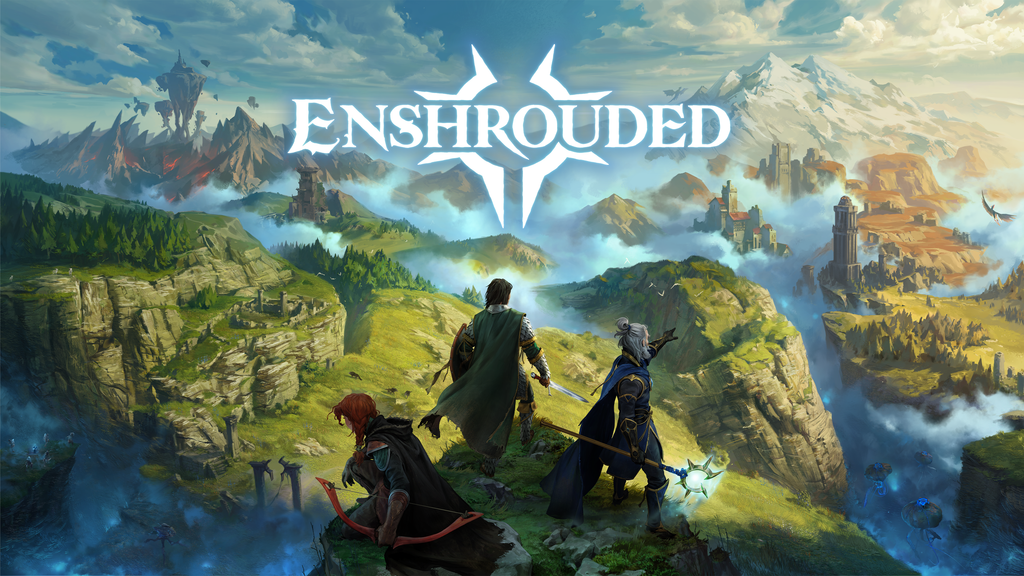
Attracting 5 million players in just over 2 years since its launch, the survival game Enshrouded is a runaway hit.
Keen Games, the German video game development studio behind Enshrouded, was delighted. But as the game’s player base expanded beyond expectations, its Discord community ballooned from a dozen users to over 180,000 members. Engaging with players on game improvements became a huge challenge.
“No matter how big your screen is, it will not be big enough to accommodate even 1% of these people trying to talk to you,” shares François Hardy, Keen Games’ Community Lead.
“If each person sent just one message during the day, you’re going to spend a couple hours reading everything.”
Keeping player feedback discoverable as the community grows
Traditional platforms and forums give players a place to talk, share experiences, and discuss ideas in depth. But as conversations multiply, it becomes harder to keep individual suggestions visible over time.
For François, a particular challenge was what happened when new players joined. A discussion might already exist about the very thing they wanted to suggest, but they had no way of knowing it was there. Earlier conversations slipped out of view as new ones took their place.
“After a while, you know, like new people will not know that this conversation exists because it’s not advertised to them in any way.”
The team needed a way for players to find existing suggestions and add their support, and for community managers to see which ideas were gaining traction without reading every conversation from beginning to end.eas were gaining traction without reading every conversation from beginning to end.
François went looking for a player feedback management solution. He learnt through word of mouth that the developers of another hit game were experiencing great results using Feature Upvote to collect and manage player feedback on a dedicated board.
“Yeah, that would work for us,” he thought.
Feature Upvote provides a frictionless player feedback experience for large game communities
François created a Feature Upvote board and introduced it to the Enshrouded community. It was an instant success.
The board now contains over 2,000 player-submitted ideas, many of which have racked up thousands of upvotes.
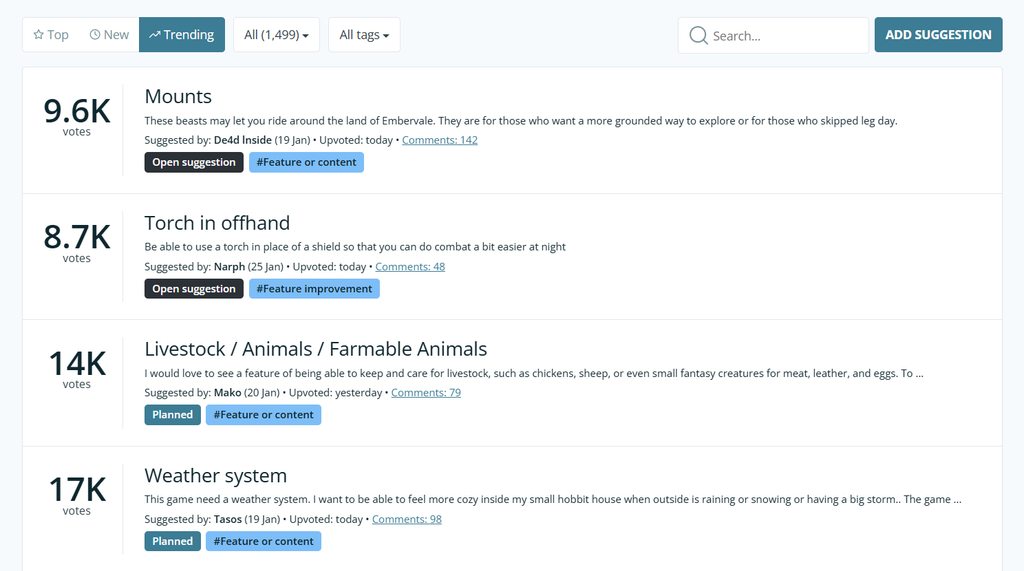
This sheer volume of player feedback is a testament to the game’s popularity. The fact that players don’t need a Feature Upvote account to contribute or vote on suggestions also helps.
“You can just drive by and click, click, click, upvote a bunch of stuff and leave, never to return. And that’s fine,” says François.
“You don’t want to give me your email? It’s fine, I don’t need it.”
François likes that he can sort player feedback not just by their number of votes, but also by submission date and trending ideas. This makes it easier for him to surface high-quality suggestions buried under more popular ones.
A small quality-of-life change can attract as much interest as a new feature
One of the interesting things François discovered was how major feature requests and seemingly simple quality-of-life improvements could attract similar levels of support.
At the time of the interview, mounts were the top trending suggestion. Just below them was a much smaller request: letting players hold a torch in their other hand, so they could carry a weapon at the same time.
“It’s interesting to see that those are on the same level. These are the things that sort of draw consensus.”
One would be a substantial addition to the game. The other addressed an everyday inconvenience. Yet both mattered enough for players to vote for them.
For the team, it was a useful reminder that the size of a feature doesn’t necessarily reflect how much players care about it. A quality-of-life improvement can deserve just as much attention in a development discussion as a bigger addition.
Not every suggestion was about changing the game. One called for the developers to get a raise—and attracted thousands of upvotes. As François noted, players found a way to show their appreciation even somewhere the team wasn’t expecting it.
Giving community members a way to help
A busy feedback board also takes work to maintain. During our conversation, François spoke about the effort involved in reviewing new suggestions and checking for duplicates.
Some players were keen to help with the Feature Upvote board. But giving volunteers access raised another question: how could they contribute without seeing private user information?
An update since our interview: Feature Upvote now has a restricted moderator role. Restricted moderators can approve, merge, split, and tag suggestions directly on the board, without access to private data such as email or IP addresses, or to board settings.
This gives teams a way to involve community members in managing feedback while keeping their access limited to the work they need to do.
“Use Feature Upvote. It’s good.”
François advises developers to implement Feature Upvote into their community management process as early as possible to learn public perception of their game—and then correct it as needed.
“Do people think your game is Dark Souls when your game is Zelda? Because if so, it’s going to generate a lot of friction,” says François.
“It’s always useful to know how people react and how people consider your game ahead of time. I think that Feature Upvote does help with that, and that’s fantastic.”
Having discovered Feature Upvote from others, François is also more than happy to pay the recommendation forward.
“To us, this is also word of mouth for other community managers or other studios, like: ‘Hey, use that sh*t. It’s good.”